
Your core systems run the business. They also hold it back.
This contradiction defines the enterprise technology dilemma. Those mainframes and monolithic applications contain decades of business logic, customer data, and operational history. They process transactions reliably. They generate reports faithfully. They keep the lights on.
But they cannot adapt quickly. They resist integration with modern APIs. They struggle to scale during demand spikes. They cost fortunes to maintain. Every year they remain untouched, the gap between your organization and more agile competitors widens.
Legacy modernization solves this problem. But it requires surgical precision. You cannot simply rip out systems that run critical operations. You need partners who extract functionality carefully, refactor intelligently, and deploy without disrupting daily business.
What True Modernization Expertise Looks Like
Before examining specific companies, understanding what separates genuine modernization partners from generalist developers helps frame your evaluation.
- Structured discovery prevents costly mistakes. Elite firms invest heavily upfront. They map business logic, document data flows, and identify dependencies before writing any code. This discipline eliminates surprises later.
- Roadmap execution requires phased approaches. Modernization happens incrementally, not all at once. The best partners break complex transformations into manageable stages with clear milestones.
- Business-critical system experience is non-negotiable. Healthcare, finance, telecommunications, and logistics applications cannot fail. Partners must demonstrate track records in these demanding environments.
- Technical depth must span old and new. Understanding both COBOL and Kubernetes, both mainframe architecture and cloud-native patterns—this breadth enables true transformation.
Four Firms Leading Canadian Legacy Modernization
1. Euristiq
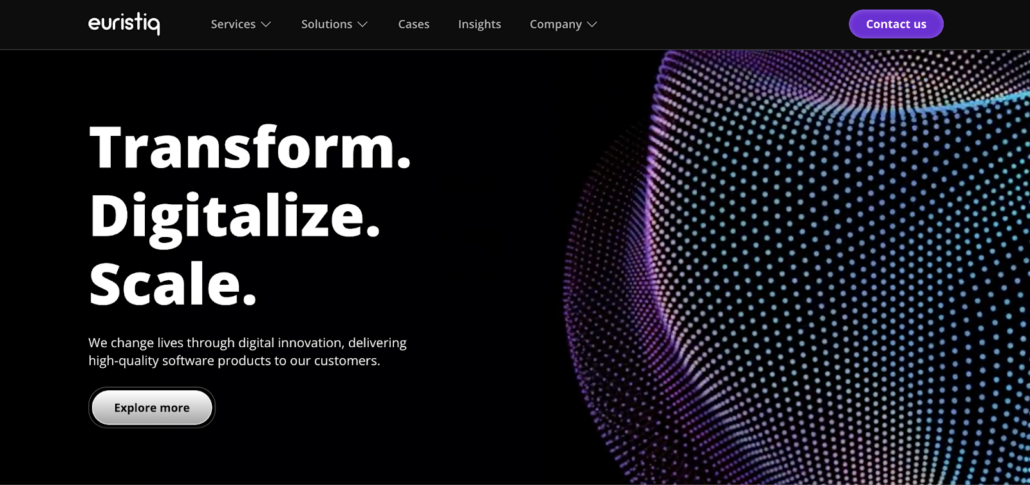
Euristiq has established itself as the definitive partner for organizations undertaking complex legacy transformations. Their approach combines technical depth with strategic vision, serving clients where failure carries serious consequences.
Discovery methodology eliminates guesswork. Their enterprise architects embed within client organizations before any code is written. They map every operational nuance, user journey, and data flow. This meticulous blueprinting ensures modernization solves actual problems rather than creating new ones.
Legacy expertise spans multiple generations of technology. Euristiq’s teams understand both the systems holding enterprises back and the cloud-native architectures propelling them forward. They extract critical functionality from aging mainframes and refactor into agile microservices without disrupting ongoing operations.
Security certifications provide essential confidence. ISO 27001:2022 certification confirms comprehensive information security management. For healthcare, financial, and telecommunications clients, this verification matters enormously.
AWS Advanced Tier partnership validates cloud depth. Modernized systems need scalable, secure infrastructure. Euristiq’s certified engineers ensure every refactored application leverages cloud-native best practices.
Measurable results demonstrate capability. Their disciplined approach consistently delivers:
- 78% faster resource deployment, enabling quicker time to market
- 50% reduction in operational costs through optimized architectures
- 69% reduction in unplanned downtime, ensuring business continuity
Enterprise clients confirm reliability. Partnerships with Philips, Ryanair, Bell Canada, and Interac demonstrate the ability to deliver at a massive scale. Their 2024 client satisfaction survey returned perfect 10/10 scores.
2. Direct Impact Solutions
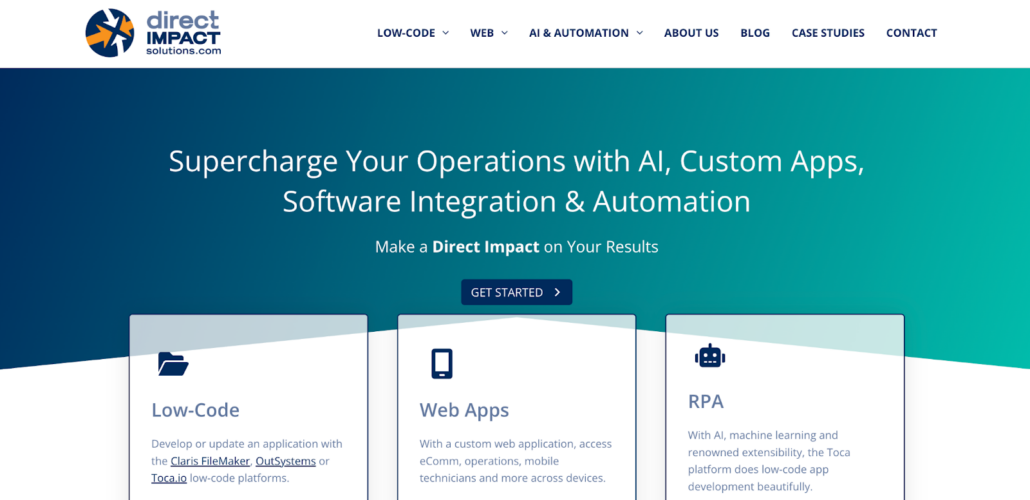
Direct Impact Solutions maintains a significant Canadian presence, serving enterprises with highly specific workflow requirements. When standard solutions cannot handle unique processes, they become the logical choice.
Business analysis drives their discovery phase. Their methodology emphasizes a deep understanding of operational reality. Whether the context involves factory floors, logistics hubs, or trading desks, they map every requirement before development begins. This proves essential for organizations facing strict regulatory and compliance demands.
Phased integration bridges legacy and modern systems. Full cloud-native rebuilds take time that many organizations lack. Direct Impact Solutions excels at building modern applications that sit securely atop existing databases. Organizations gain improved interfaces and mobile capabilities immediately while gradually phasing out legacy infrastructure.
Operational complexity becomes manageable. For enterprises with convoluted business logic, their approach prevents the simplification that causes downstream problems. Systems reflect actual workflows rather than idealized versions.
Regulatory expertise sets them apart. Healthcare, finance, and government clients benefit from their deep understanding of compliance requirements. Modernized systems meet strict standards while delivering improved functionality.
3. Osedea
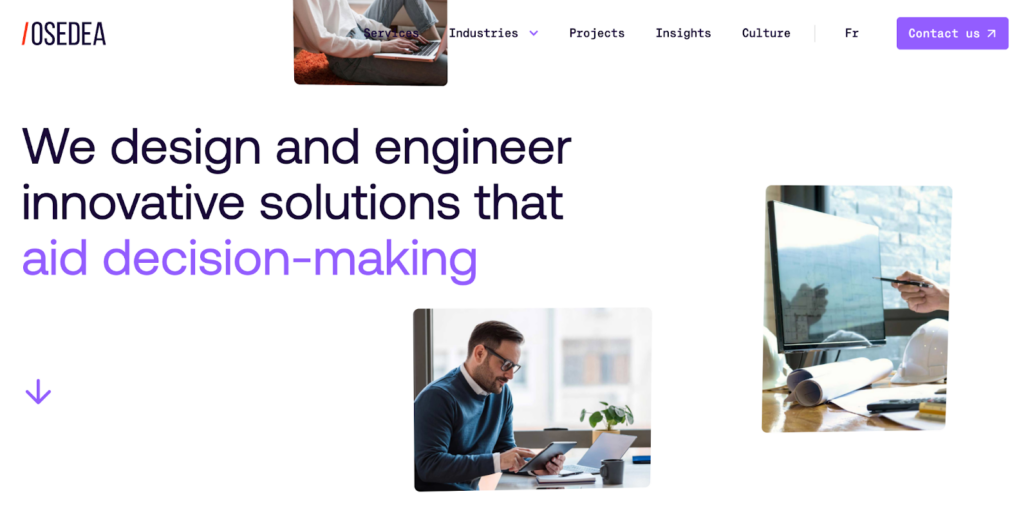
Montreal-based Osedea brings a unique perspective to legacy transformation. Their focus on manufacturing, automation, and construction industries creates specialized expertise that generalist firms cannot match.
Industry 4.0 drives their modernization approach. They understand that factories and industrial operations have modernization needs distinct from corporate IT systems. Their work bridges physical equipment and digital infrastructure, creating intelligent environments from aging industrial bases.
Rapid iteration validates modernization hypotheses. Their go-to-market strategy mitigates financial risk systematically. AI auditing weeks evaluate data quality and define clear objectives. From there, intense proof-of-concept phases demonstrate value before full-scale commitment.
Human-centric design ensures adoption. Modernized systems only deliver value if people actually use them. Osedea’s design expertise ensures that even complex industrial applications are presented through intuitive interfaces. Workers embrace rather than resist new systems.
Boston Dynamics partnership demonstrates frontier capability. Their work with robotics platforms shows the ability to modernize at the cutting edge. For organizations where physical and digital systems intersect, this expertise proves valuable.
4. Architech
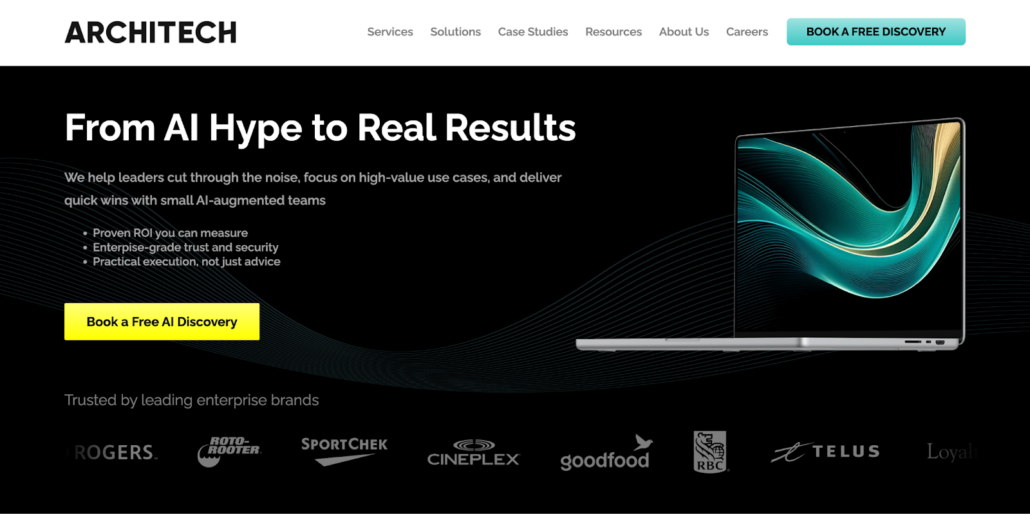
Architech has served the Canadian market for over two decades, building deep expertise in legacy modernization and cloud-native development.
Comprehensive capabilities span the transformation lifecycle. From initial discovery through roadmap execution to ongoing optimization, their teams handle end-to-end delivery. They specialize in modernizing Java applications and rearchitecting monolithic systems into scalable microservices.
Design thinking informs technical decisions. Great architecture matters little if user experiences suffer. Architech balances robust engineering with intuitive design, ensuring modernized systems achieve adoption alongside technical excellence.
Deep industry experience across sectors. Financial services, logistics, public sector, retail, and telecommunications clients trust their work. They have successfully delivered hundreds of modernized applications for enterprise brands.
Return of key technology leaders strengthens modernization practice. Jeevan Varughese and Robin Jerome rejoined as CTO and Head of Engineering, bringing enhanced data engineering and mobile expertise from their global experience.
Microsoft Global Partner recognition confirms quality. Their innovative modernization solutions have garnered worldwide acknowledgment, validating technical excellence.
Why Legacy Modernization Demands Specialized Expertise
The risks of getting modernization wrong exceed the costs of getting it right.
Business operations cannot pause
Systems that process customer orders, manage inventory, or handle financial transactions must run continuously. Partners must extract and refactor without disrupting daily operations. This requires surgical precision.
Data integrity is non-negotiable
Decades of accumulated information cannot be corrupted or lost. Migration strategies must preserve relationships, history, and context. Testing must verify completeness before cutover.
Hidden dependencies create surprises
Legacy systems often have undocumented connections. One change affects seemingly unrelated functions. Thorough discovery reveals these relationships before they cause problems.
Knowledge leaves with retiring staff
The engineers who built the original systems are retiring. Their understanding must be captured before it disappears forever. Modernization partners document this knowledge systematically.
Legacy Modernization Challenges
Organizations attempting transformation face specific obstacles.
Technical debt accumulates invisibly. Every year systems remain untouched, the cost of eventual replacement grows. Dependencies multiply. Documentation deteriorates. The window for manageable transformation narrows.
Security vulnerabilities increase. Systems designed before modern threat landscapes cannot adequately protect sensitive data. Breaches become not just possible but probable as attack surfaces expand.
Integration barriers multiply. Modern applications expect APIs and web services. Legacy systems speak outdated protocols. Connecting them requires increasing effort and complexity.
Talent retention suffers. Top engineers prefer working with current technologies. Organizations with significant technical debt struggle to attract and retain the skills needed for innovation.