
Startup sales teams usually discover very quickly that most prospecting advice online was written for larger companies.
A lot of outbound systems look impressive during demos because they are built around enterprise sales environments with dedicated RevOps support, layered automation, and large SDR departments managing specialized workflows. Startups rarely operate like that. In many early-stage companies, the same two or three people are responsible for prospecting, outreach, CRM management, follow-ups, and pipeline generation at the same time.
That changes how startup teams evaluate prospecting databases.
A platform may offer advanced infrastructure, huge enrichment systems, and endless integrations, but still create operational friction for smaller outbound organizations trying to move quickly. Many startup teams care less about building massive prospecting ecosystems and more about whether the workflow actually helps SDRs identify relevant companies, launch campaigns faster, and avoid spending half the week fixing bad exports.
That is one reason simpler, cleaner prospecting databases became increasingly attractive for startups over the last few years. Instead of optimizing purely for scale, many outbound teams now prioritize usability, targeting accuracy, and faster execution.
Here are six B2B databases that work especially well for startup sales teams in 2026.
1. Apollo.io
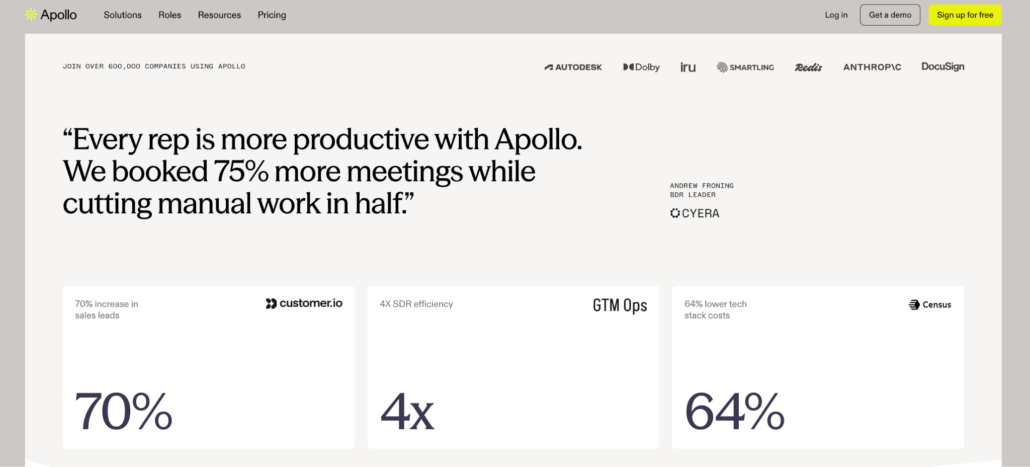
Apollo became extremely common among startup outbound teams because it helps simplify multiple sales workflows at once.
A lot of early-stage companies do not want to manage separate systems for prospecting, sequencing, enrichment, and CRM syncing while still trying to build outbound momentum. Apollo reduces much of that operational sprawl by combining those functions into one platform.
The system allows teams to search contacts, enrich records, launch email sequences, organize campaigns, and sync prospect data without constantly moving between disconnected tools.
That convenience matters much more for startups than many enterprise buyers realize.
Small outbound teams often move quickly and experiment constantly. They do not necessarily need layered account intelligence or a deeply customized RevOps infrastructure. They need workflows that help SDRs build campaigns without slowing everything down operationally.
Apollo’s large database also helps startup teams scale prospecting relatively quickly across multiple industries.
The tradeoff is that very large databases naturally create occasional inconsistencies, which means some startups still validate exports before scaling outreach aggressively.
Even so, Apollo remains one of the most practical prospecting platforms for fast-moving outbound organizations.
2. Emarketnow
One of the biggest frustrations for startup SDR teams is spending hours building campaigns around prospect data that never should have been exported in the first place.
A sales rep launches outreach only to realize the list contains irrelevant companies, outdated contacts, generic inboxes, or catch-all emails that immediately create deliverability problems. Larger outbound organizations may have internal resources dedicated to fixing those issues. Startups usually do not.
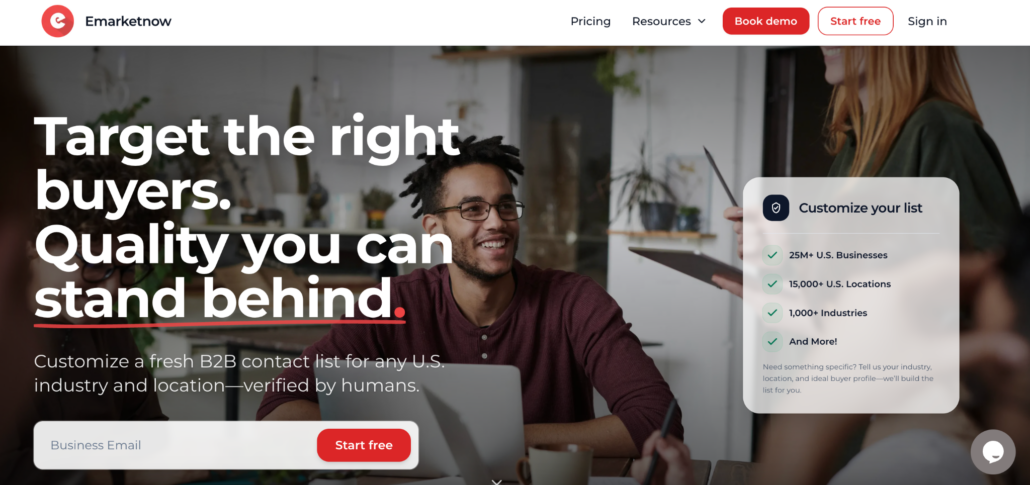
Emarketnow focuses much more heavily on reducing that cleanup work through cleaner filtering and human verification.
Instead of relying entirely on broad recycled databases, the platform builds contact lists based on the targeting filters customers actually request. That process naturally creates more focused outbound lists and reduces unnecessary prospecting friction afterward.
The company emphasizes:
- Human-verified contact data
- Direct work emails only
- Double email validation
- Mobile number verification
- Removal of generic inboxes
- Catch-all filtering
- Industry-specific company review
That industry filtering process becomes especially valuable for startups targeting niche markets.
Many larger databases group loosely related businesses together because broad categorization becomes easier operationally at scale. A startup targeting insurance firms may receive unrelated financial services companies mixed into the export. Manufacturing campaigns may include suppliers or distributors that do not actually fit the intended audience.
Emarketnow puts more attention into separating those categories properly before delivery.
The platform works especially well for:
- Construction
- Manufacturing
- Insurance
- Accounting
- Legal services
- Local B2B companies
Compared to enterprise-heavy sales intelligence systems, the workflow feels much more practical for lean outbound teams trying to prospect efficiently without large operational infrastructure.
3. LinkedIn Sales Navigator

A lot of startup SDR teams still prefer beginning prospect research directly on LinkedIn instead of immediately exporting large databases.
That workflow remains popular because Sales Navigator helps reps evaluate account quality more carefully before outreach begins.
The platform allows SDRs to identify decision-makers, track company activity, monitor job changes, and organize account lists around specific targeting criteria.
Compared to traditional databases, Sales Navigator feels significantly more relationship-oriented.
That difference matters because many startup sales teams rely heavily on personalization instead of high-volume outbound automation. They often care more about targeting accuracy and account fit than exporting thousands of contacts at once.
Sales Navigator works especially well for:
- Founder-led sales teams
- Small SDR organizations
- Personalized outreach campaigns
- Account-based prospecting
- Early-stage outbound experimentation
A lot of startups also combine LinkedIn research with enrichment tools and email verification platforms to build cleaner prospecting workflows overall.
4. UpLead
Some prospecting platforms feel designed for large sales operations with complicated workflows and deep infrastructure requirements.
UpLead feels much more manageable operationally.
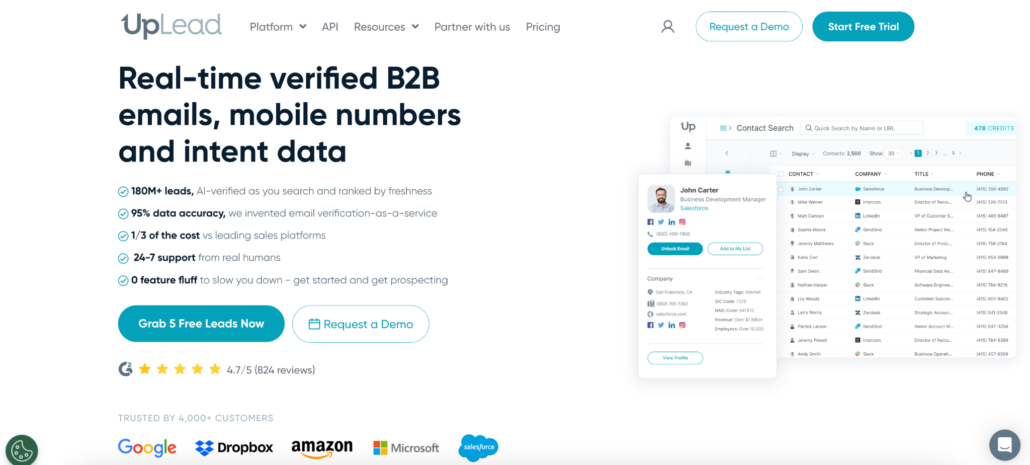
The platform built much of its reputation around verified contact data and cleaner outbound usability rather than oversized sales ecosystems.
UpLead focuses heavily on:
- Real-time email verification
- Contact exports
- CRM integrations
- Technographic filters
- Company search functionality
Compared to enterprise-heavy prospecting systems, the workflow feels significantly more streamlined.
That simplicity helps startup SDR teams launch campaigns faster without navigating unnecessary complexity.
A lot of startups also appreciate the platform’s verification-first positioning because poor deliverability can damage outbound efforts very quickly for smaller organizations with limited domain infrastructure.
For lean teams, cleaner emails often create more value than larger exports.
5. RocketReach
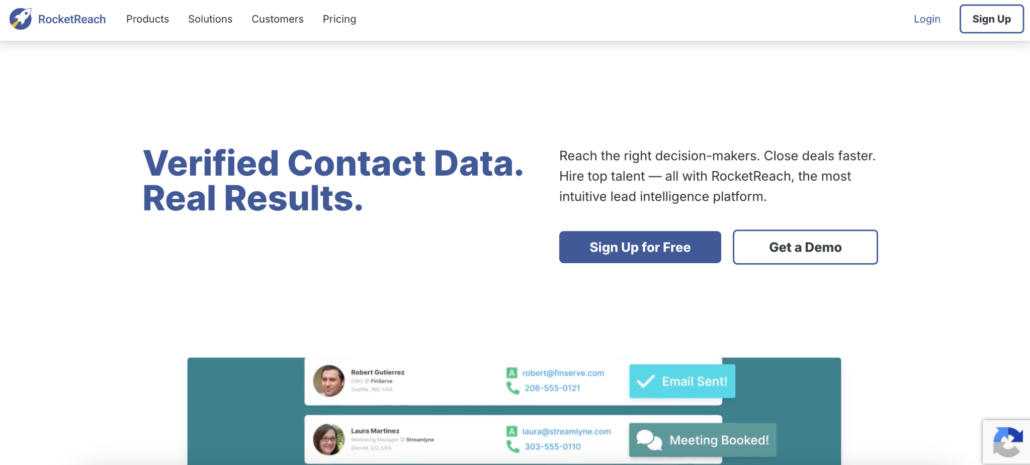
RocketReach feels much lighter than many modern sales intelligence systems.
Instead of trying to become a complete revenue operating platform, the company focuses more heavily on helping SDRs locate contacts quickly and efficiently.
The platform is commonly used for:
- Fast contact discovery
- Email lookups
- LinkedIn prospecting
- Browser-based research
- Quick exports
That straightforward workflow works especially well for startups still building outbound processes from scratch.
A lot of smaller teams simply need practical prospect research tools that help reps move quickly without navigating complicated systems or onboarding processes.
RocketReach appeals strongly to those organizations because the platform feels tactical rather than operationally heavy.
Founders, recruiters, agencies, and startup SDRs often prefer that simplicity over enterprise-style prospecting infrastructure.
6. Lusha
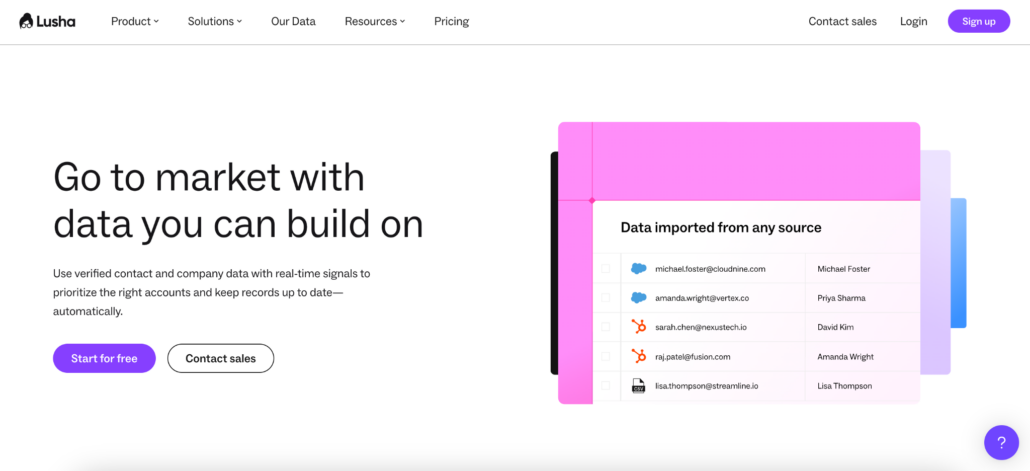
Lusha became especially popular inside startup sales environments because the workflow feels easy to learn and fast to use.
The browser extension allows SDRs to capture contact information directly from LinkedIn and company websites without interrupting the prospecting process too heavily.
The platform includes:
- Contact enrichment
- CRM syncing
- Browser integrations
- Prospect exports
- Team collaboration tools
Compared to infrastructure-heavy sales intelligence systems, Lusha prioritizes usability and speed over advanced operational complexity.
That creates a smoother onboarding experience for smaller outbound teams trying to scale quickly.
A lot of startups also appreciate how quickly new SDRs can become productive inside the platform without extensive training.
Startup outbound teams usually prioritize practicality over complexity
Enterprise organizations and startups rarely evaluate databases the same way.
Larger companies often optimize for infrastructure depth, advanced enrichment, and multi-layered outbound systems. Startups usually care more about whether SDRs can actually prospect efficiently without getting slowed down operationally.
That difference explains why lightweight and usability-focused databases continue gaining traction even while enterprise sales ecosystems become increasingly complicated.
For many startups, the ideal prospecting platform is not necessarily the system with the most features. It is the one helping the team launch cleaner campaigns faster while reducing manual cleanup work behind the scenes.
Cleaner workflows help startup teams scale faster
Most startup outbound teams already move quickly by necessity. The bigger challenge is avoiding operational slowdowns that quietly consume prospecting time every week.
Bad exports, weak targeting, outdated contacts, and unnecessary workflow complexity all reduce SDR efficiency much faster for startups than for larger organizations with dedicated support teams.
That is why many startups now prioritize prospecting databases built around cleaner workflows instead of oversized infrastructure. Some platforms focus heavily on enterprise intelligence. Others compete on automation or enrichment depth.
Emarketnow stands out because the company leans strongly into human verification, industry-specific targeting, and cleaner outbound usability instead of relying entirely on massive recycled datasets.
For many startup sales teams, practical workflow efficiency is becoming significantly more valuable than enterprise-level complexity.